
Quick verdict
EP-2 Pro if you must fold and stow; Hunter 2.0S if you have garage space and want 26-inch tires plus 864Wh for under $900.
✓Best for: Trunk/RV travelers (EP-2) vs long-range fixed-frame trail commuters (Hunter).
✕Avoid if: Riders expecting a folding Hunter—it does not fold.
If you need something that folds into a car trunk or closet, the Engwe EP-2 Pro wins—full stop. If folding does not matter and you want a bigger tire, larger battery, and commuter extras like cruise control and turn signals for under $900, the Kingbull Hunter 2.0S is the sharper value play.
Deal snapshot
| Bike type | Head-to-head comparison |
|---|---|
| Motor | Varies by model |
| Range (real-world) | See table below |
| Foldable | Varies |
| Deal type | Model vs model |
Price rangeCheck both carts
Hunter vs EP-2: check both prices if you need range vs fold.
Compare Hunter & EP-2

| Bike type | Motor | Range (real-world) | Foldable | Deal type |
|---|---|---|---|---|
| Bike type | Head-to-head comparison | |||
| Motor | Varies by model | |||
| Range (real-world) | See table below | |||
| Foldable | Varies | |||
| Deal type | Model vs model |
Quick take: If you need something that folds into a car trunk or closet, the Engwe EP-2 Pro wins—full stop. If folding does not matter and you want a bigger tire, larger battery, and commuter extras like cruise control and turn signals for under $900, the Kingbull Hunter 2.0S is the sharper value play.
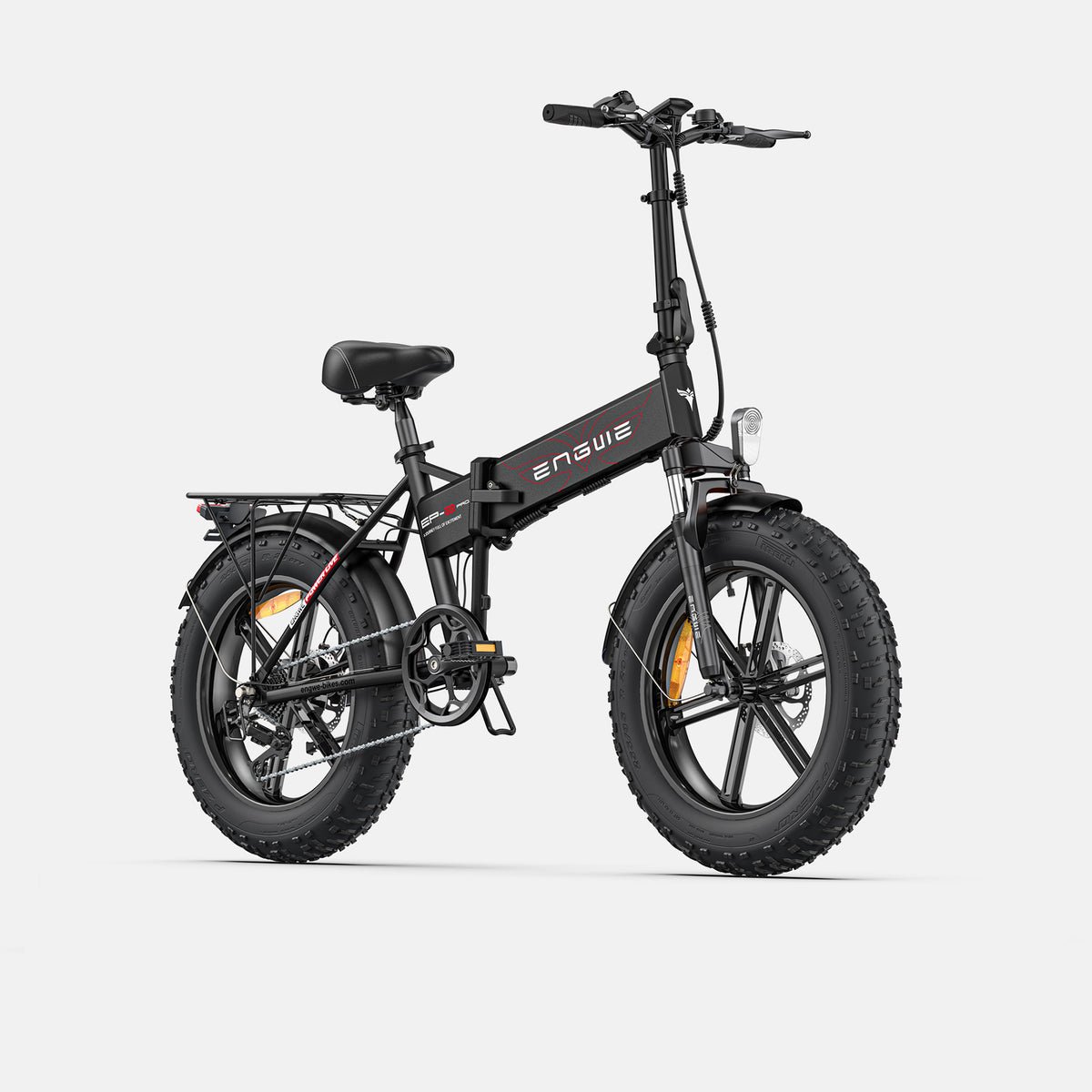
These bikes look related—fat tires, 750W hubs, similar sale prices—but they solve different problems. The Hunter is a fixed-frame 26-inch all-terrain rig. The EP-2 Pro is a portable 20-inch folder that trades range and road gear for packability. Cross-shopping them usually means you are deciding between where the bike lives (garage vs apartment trunk) rather than which motor logo you prefer.
Side-by-side specs
| Feature | Kingbull Hunter 2.0S | Engwe EP-2 Pro |
|---|---|---|
| Price (sale) | $899 | ~$999–$1,099 (check store) |
| Motor | 750W hub (1,300W peak) | 750W hub (peak boost) |
| Battery | 48V 18Ah (864Wh) | 48V 13Ah (624Wh) |
| Range (claimed) | Up to 80 miles | ~50–60 miles (PAS, real-world varies) |
| Top speed | 28 MPH | 28 MPH |
| Weight | 77 lbs | ~68–72 lbs (varies by trim) |
| Tires | 26″ × 4.0″ fat | 20″ × 4.0″ fat |
| Suspension | Front fork w/ lockout | Front fork (hardtail-style) |
| Brakes | Hydraulic disc | Mechanical or hydraulic (trim-dependent) |
| Folding | No | Yes (frame + stem) |
| Best for | Long-range trail & cargo runs | Trunk storage, RV, mixed terrain folder |
Price and what the money actually buys
Kingbull’s Hunter 2.0S has been selling around $899 against a $1,699 list price. That is a lot of bike for the money: hydraulic brakes, an 864Wh pack, integrated turn signals, cruise control, and a steel rear rack included.
The EP-2 Pro usually lands closer to $1,000 depending on sales and color. You are paying for Engwe’s folding hardware, a proven global parts ecosystem, and a platform we have seen hold up in our 2x EP-2 Pro bundle write-up for couples and RV travelers. You are not paying for the biggest battery in the class.
Motor, battery, and real-world range
Both use a 750W rear hub with a higher peak boost for hills. Kingbull quotes up to 1,300W peak on the Hunter; Engwe markets strong peak assist on the EP-2 as well. Either can hit 28 MPH where Class 3 rules allow.
Battery capacity is where the Hunter pulls ahead on paper: 18Ah (864Wh) vs the EP-2’s 13Ah (624Wh). In practice that means the Hunter is the better bet for throttle-heavy weekend loops and fewer mid-ride anxiety moments. The EP-2 still covers typical commutes and 15–25 mile mixed rides if you are willing to pedal—just plan charging more often if you ride like it is a scooter.
Tires, handling, and ride feel
The Hunter’s 26 × 4.0″ tires roll over potholes and loose gravel with less drama than the EP-2’s 20 × 4.0″ setup. Think stability and momentum, not nimble lane changes. The front suspension with lockout lets you firm up the fork on smooth asphalt so you are not bobbing unnecessarily.
The EP-2 feels more eager in tight city cuts and fits where 26-inch wheels do not. Fat 20s still grip well on packed dirt and light snow, but you will work harder on deep sand than on the Hunter. If your route is half urban dodge-and-weave, half weekend path, the folder is more fun; if your route is long straight trails and loaded rear racks, the Hunter feels planted.
Folding, storage, and daily logistics
This is the deal-breaker category. The EP-2 folds at the frame and stem—real apartment and SUV-trunk utility. The Hunter does not fold. You need garage space, a beefy rack, or tolerance for leaving a 77-pound bike outside. See our foldable e-bike guide if storage is non-negotiable.
Strengths and weaknesses
Kingbull Hunter 2.0S
Strengths: Huge single battery for the price; 26-inch fat tires; hydraulic brakes; cruise control and turn signals; included rack; strong hill torque on paper.
Weaknesses: No folding; high-carbon steel frame adds weight; not ideal for walk-up flats; less brand familiarity than Engwe for international support.
Engwe EP-2 Pro
Strengths: True folding portability; widely available parts and bundles; capable on mixed surfaces; easier to pair with a second identical bike.
Weaknesses: Smaller battery than Hunter; 20-inch wheels limit rollover comfort; sale price often creeps above $900; mechanical brakes on some trims need more maintenance attention.
Who should buy which?
Choose the Hunter 2.0S if you have storage space, want maximum range per dollar, and ride longer distances with cargo. It is a budget alternative to premium 26-inch fat bikes—not a folder pretending to be one.
Choose the EP-2 Pro if you need to lift the bike into a vehicle, live in a small home, or want one model that can commute Monday and camp Saturday. Compare it with the step-through Engwe L20 2.0 if comfort and suspension matter more than raw off-road tire size.
Garage bike or folder—confirm the winner’s cart total before buying.
View prices → Check Engwe EP-2 Pro priceAffiliate disclosure: We may earn a commission if you buy through our links. Learn more.