
Quick verdict
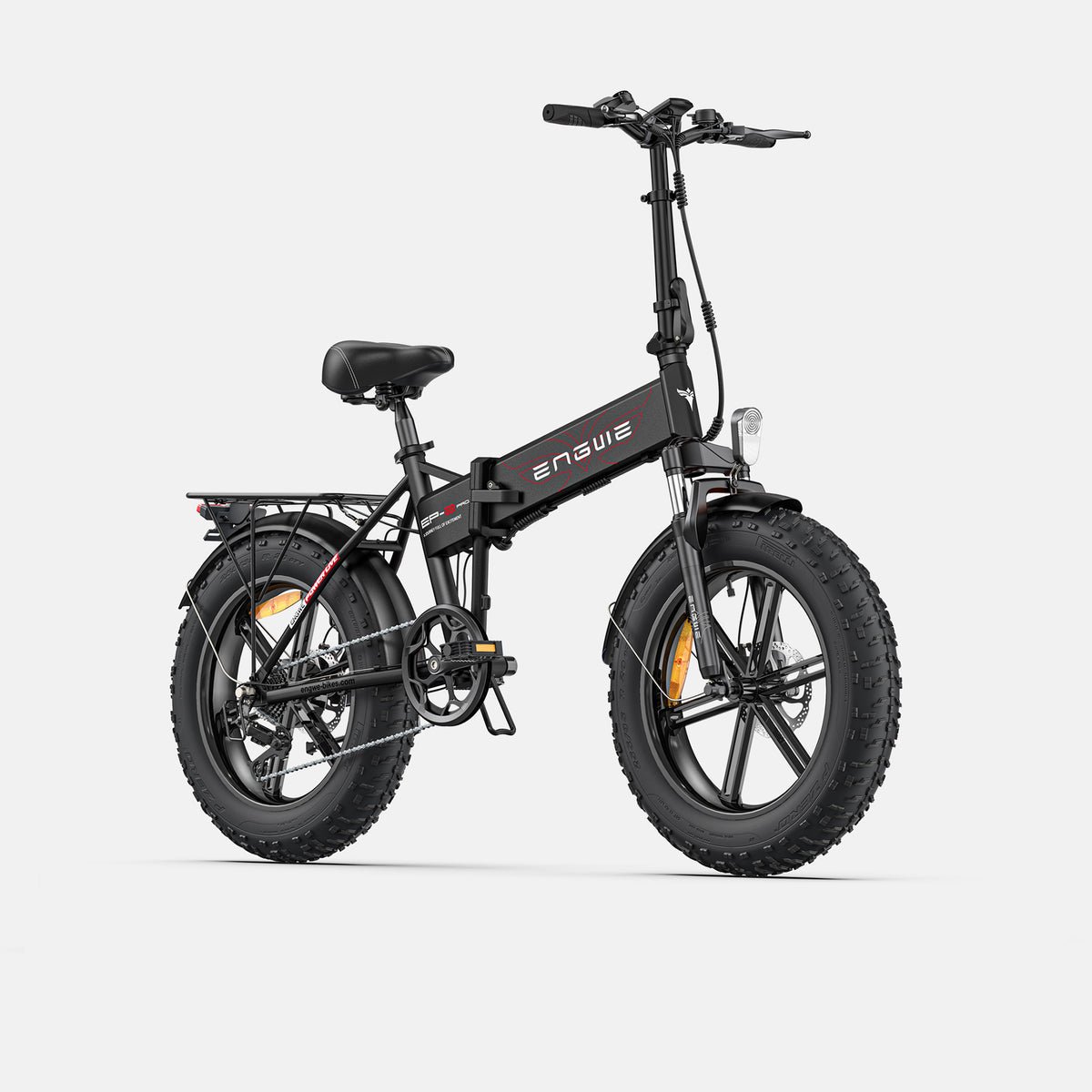
L20 2.0 for upright step-through comfort and 52V city punch; EP-2 Pro for 4-inch tires and all-terrain grip.
✓Best for: Utility commuters with racks (L20) vs mixed-terrain folders (EP-2).
✕Avoid if: Trail-only riders choosing L20 for sand; speed-focused riders choosing TK1-paced trikes.
The L20 2.0 is the easier bike to live with in the city—step-through, dual suspension, integrated rack, and a higher-voltage 52V system for punchy starts. The EP-2 Pro is the more aggressive folder: wider tires and a reputation as Engwe’s do-everything fat-tire workhorse.
Deal snapshot
| Bike type | Head-to-head comparison |
|---|---|
| Motor | Varies by model |
| Range (real-world) | See table below |
| Foldable | Varies |
| Deal type | Model vs model |
Price rangeCheck both carts
L20 vs EP-2: compare live prices for commute vs fat-tire folders.
Compare L20 & EP-2

| Bike type | Motor | Range (real-world) | Foldable | Deal type |
|---|---|---|---|---|
| Bike type | Head-to-head comparison | |||
| Motor | Varies by model | |||
| Range (real-world) | See table below | |||
| Foldable | Varies | |||
| Deal type | Model vs model |
Quick take: The L20 2.0 is the easier bike to live with in the city—step-through, dual suspension, integrated rack, and a higher-voltage 52V system for punchy starts. The EP-2 Pro is the more aggressive folder: wider tires and a reputation as Engwe’s do-everything fat-tire workhorse.
You are not choosing between good and bad here. You are choosing between comfort-first commuting and traction-first versatility. Both fold. Both sit near the $1,000 psychological ceiling. For the broader Engwe ladder, see T14 vs X20 vs X26.
Note: Engwe’s US store often lists the L20 2.0 as out of stock while promoting the L20 3.0. This comparison reflects the 2.0 specs shoppers still search for; if only the 3.0 is available, use the same decision framework—step-through utility vs EP-2’s wider tires.
Side-by-side specs
| Feature | Engwe L20 2.0 | Engwe EP-2 Pro |
|---|---|---|
| Price | $799 early bird / $999 list (often OOS; see L20 3.0) | ~$999–$1,099 |
| Motor | 750W (1,125W peak), 75Nm | 750W hub (peak boost) |
| Battery | 52V 13Ah (676Wh) | 48V 13Ah (624Wh) |
| Range (claimed) | Up to 68 miles | ~50–60 miles |
| Top speed | 28 MPH | 28 MPH |
| Weight | ~68 lbs | ~68–72 lbs |
| Tires | 20″ × 3.0″ fat | 20″ × 4.0″ fat |
| Suspension | Front fork + seatpost | Front fork |
| Frame | Step-through, folding | Diamond/step variants, folding |
| Brakes | 180mm mechanical disc | Mechanical/hydraulic (trim) |
| Best for | Upright city utility & comfort | All-terrain folder, wider tires |
Voltage, torque, and how they feel off the line
The L20 2.0’s headline upgrade over many 48V commuters is its 52V 13Ah pack paired with 75Nm torque and a 1,125W peak rating. That higher system voltage tends to feel crisper when you launch from a stoplight or climb a short overpass without dropping cadence.
The EP-2 Pro stays on a conventional 48V 13Ah setup. Peak numbers are similar on paper, but the bike’s character comes from 4-inch tires and a stiffer, mountain-bike-adjacent posture. It rewards riders who stand on the pedals and treat bumps as part of the fun—not riders who want a sofa-like cruise.
Tires, suspension, and comfort
L20 uses 20 × 3.0″ tires—enough cushion for broken pavement without the rolling resistance of full 4-inch rubber. Front suspension plus a seatpost shock (on most colors) isolates repeat hits better than the EP-2’s simpler fork-only setup.
EP-2’s 20 × 4.0″ tires are the real differentiator on sand, snow, and chunky gravel. You trade some efficiency on smooth asphalt for grip when the surface gets ugly. If your commute is well-paved bike lanes, the L20 feels smoother; if you cut through alleys and park paths, the EP-2 has more margin.
Frame ergonomics and who they fit
The L20’s step-through frame is the friendlier choice for riders in work clothes, older legs, or anyone who hates swinging a leg over a high top tube. The integrated rear rack is genuinely useful for panniers—not an afterthought bolt-on.
The EP-2 suits riders comfortable with a more athletic stance (or the step-through EP-2 variant if Engwe offers it on your regional store). It is the bike we recommend when someone says, “I want one folder that can also handle weekend dirt”—see our 2x bundle analysis for how families use that use case.
Weak points worth knowing
L20 2.0 downsides: Mechanical brakes need periodic adjustment; 3-inch tires are not true sand monsters; stock availability has been spotty; not as trail-focused as the EP-2.
EP-2 Pro downsides: Less rear suspension comfort; slightly heavier feel on pure pavement; fewer built-in commuter cues (rack depends on trim); often priced above strict $1,000 budgets unless on sale.
Final recommendation
Buy the L20 2.0 (or its L20 3.0 successor) if your rides are mostly urban, you value step-through access and suspension, and you will mount bags on the rack weekly.
Buy the EP-2 Pro if you need maximum tire footprint, plan mixed-terrain weekends, or already know you prefer Engwe’s fat-tire folder ecosystem over the lighter T14 tier.
Step-through or fat-tire—verify range and weight before checkout.
Check prices →Affiliate disclosure: We may earn a commission if you buy through our links. Learn more.